
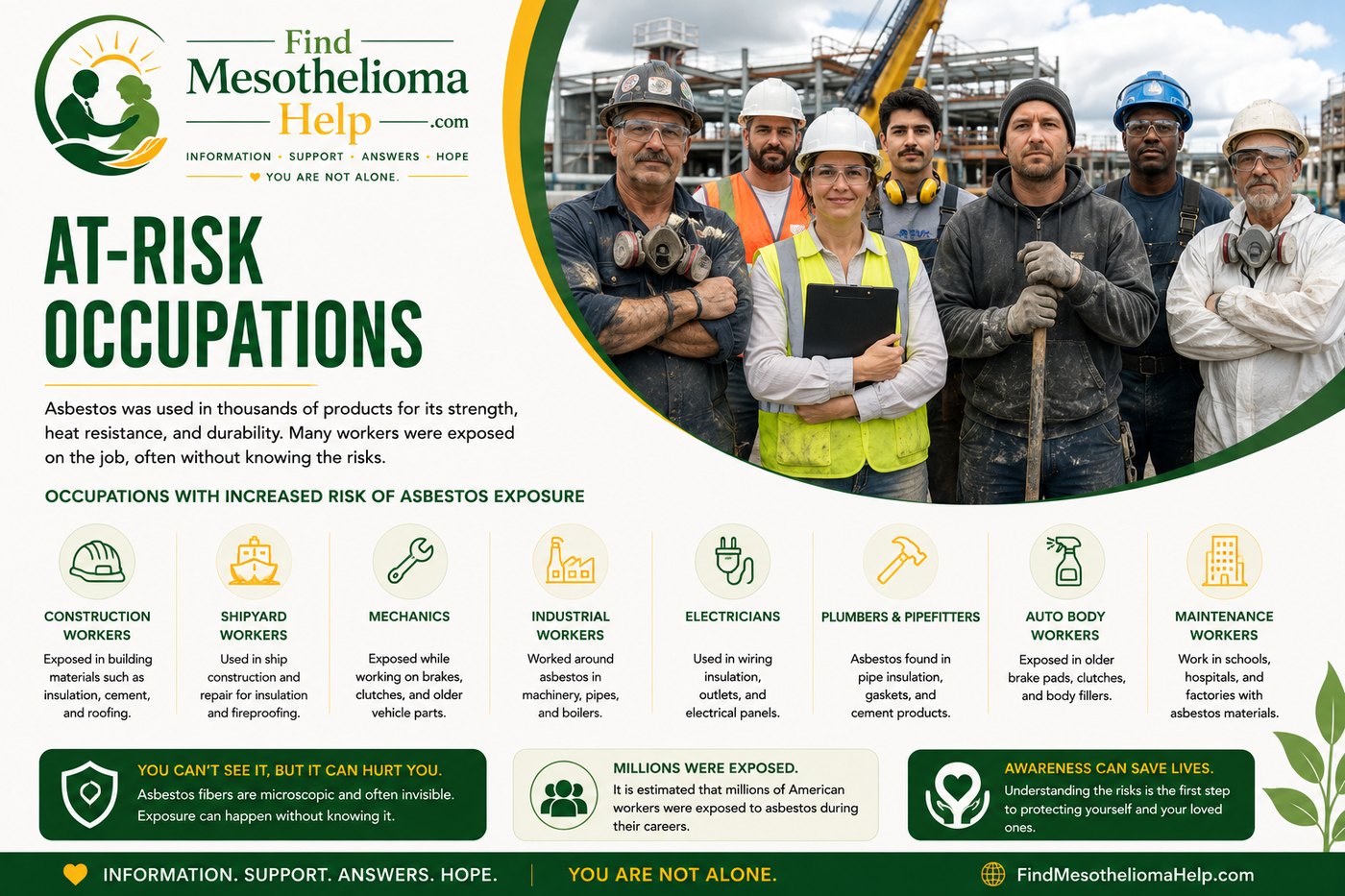
At-Risk Occupations
Certain jobs carried a much higher risk of asbestos exposure. If you worked in one of these trades or industries, it is worth knowing the signs of mesothelioma.
100% free & confidential
No obligation, ever
Real people, real answers
Free Guide
Get Your Free Road Map Guide
See what help you may qualify for. Tell us a little about your situation and your free guide downloads instantly.
For much of the 20th century, asbestos was used across countless industries. Workers in these trades were often exposed daily — and could carry fibers home to their families.
Occupations with high asbestos risk
- Shipyard workers and Navy personnel
- Construction workers, carpenters, and drywall installers
- Insulators and pipefitters
- Boilermakers and steamfitters
- Electricians and plumbers
- Power plant, refinery, and factory workers
- Auto mechanics (brake and clutch work)
- Firefighters and demolition crews
- Roofers and floor-covering installers
Even if you only worked with asbestos briefly, exposure decades ago can still cause illness today. Let your doctor know your work history.
Advertisement
Take-home exposure
Spouses and children of these workers were sometimes exposed to fibers carried home on clothing, hair, and tools — and have developed mesothelioma as a result.
Get the free Mesothelioma Road Map Guide
Clear answers on diagnosis, treatment, and the compensation you may be owed — free and confidential.
Download the Free GuideThe information on this website is provided for general educational purposes only and is not medical or legal advice. It should not replace guidance from a qualified physician or attorney. Please consult a licensed professional about your specific situation.