
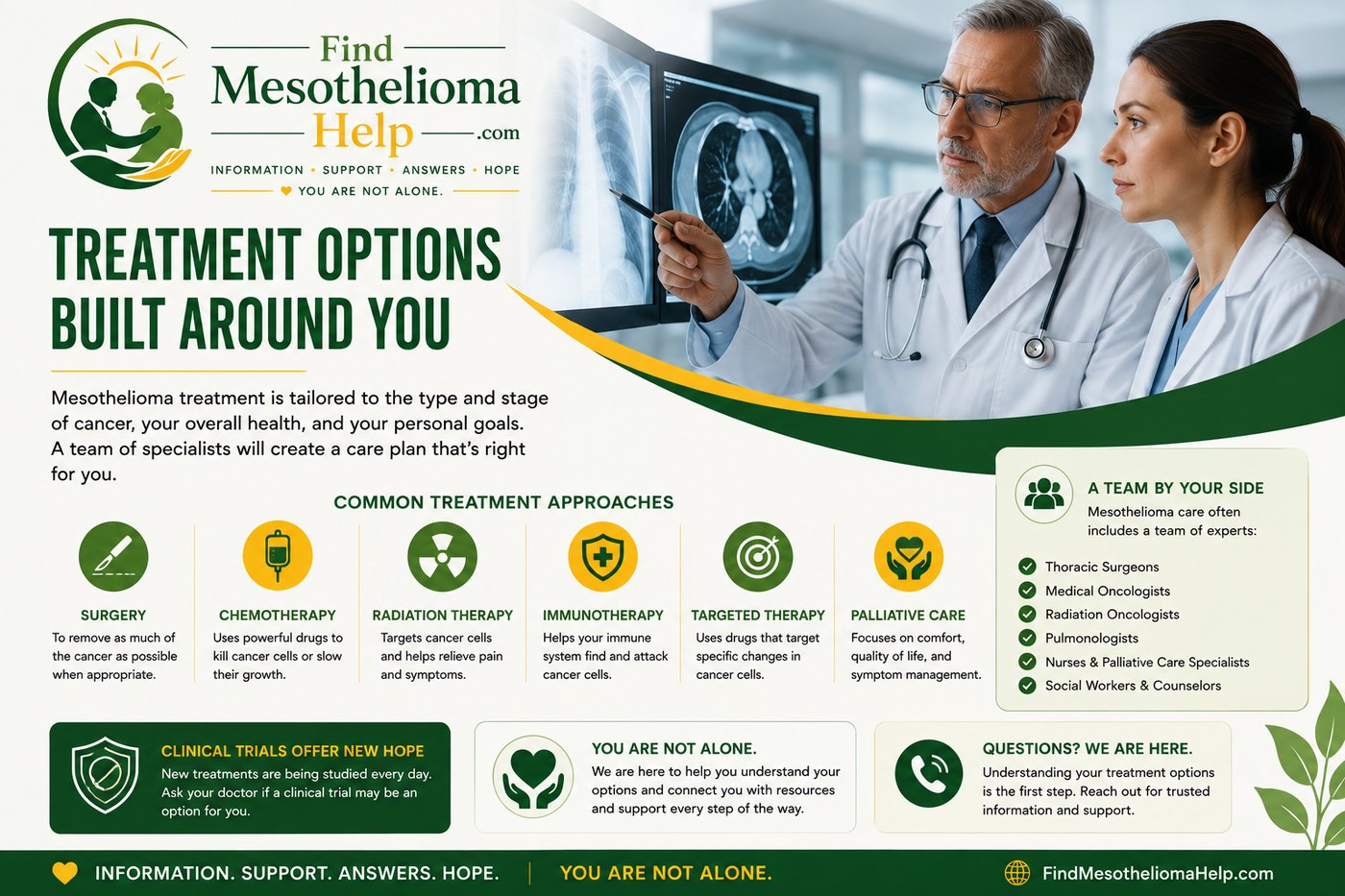
Mesothelioma Treatment Options
Treatment has come a long way. From surgery and chemotherapy to newer immunotherapies and clinical trials, there are more options today than ever — and the right plan depends on your type, stage, and overall health.
Get Your Free Road Map Guide
See what help you may qualify for. Tell us a little about your situation and your free guide downloads instantly.
The best mesothelioma treatment is highly individual. Your care team will consider the type (pleural, peritoneal, and so on), the cell subtype, the stage, and your general health to build a plan. Many patients do best with a combination of therapies rather than any single approach.
Surgery
When mesothelioma is found early, surgery may remove as much of the tumor as possible. Procedures range from pleurectomy/decortication (removing the lung lining while sparing the lung) to more extensive operations. Surgery is often paired with other treatments.
Chemotherapy
Chemotherapy uses drugs to shrink tumors and slow the cancer’s growth. It is one of the most established mesothelioma treatments and may be given before or after surgery, or on its own to control the disease and relieve symptoms.
Radiation therapy
Radiation targets cancer cells in a specific area. It can reduce pain, help control the tumor, and is sometimes used after surgery to lower the chance of the cancer returning.
Immunotherapy
Immunotherapy helps your own immune system recognize and attack cancer cells. In recent years it has become an important option for mesothelioma and, for some patients, has meaningfully extended survival.
Multimodal therapy & clinical trials
Combining two or more treatments — called multimodal therapy — often produces the best results. Clinical trials also give patients access to promising new therapies before they are widely available. A specialist can tell you which trials you may qualify for.
Get help finding treatment
Our free Road Map Guide explains your options and how to reach leading specialists and centers.
Download the Free Guide